
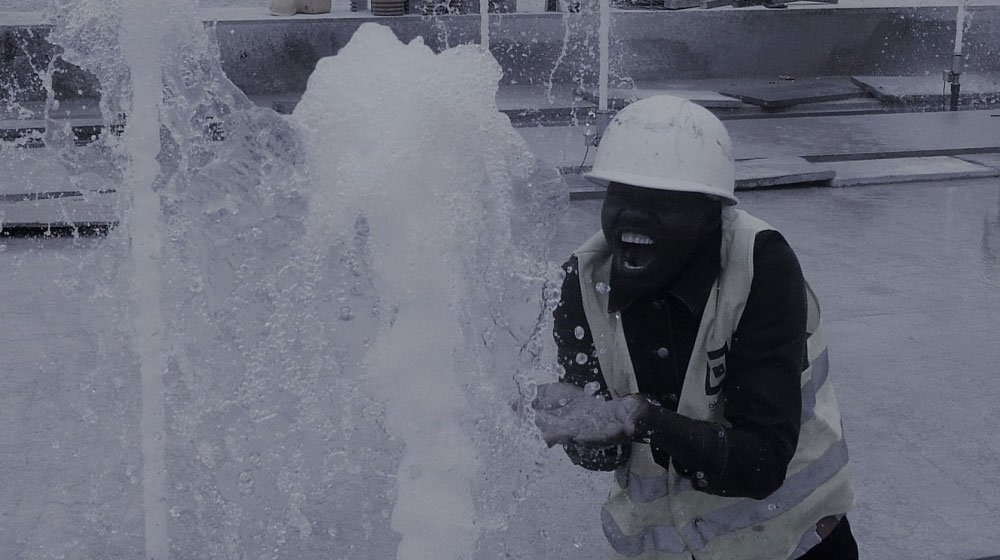
The essence of a water fountain’s success is knowing how to master the shape and movement of water, taking into account its purpose, aesthetic aspects and its integration into the surrounding space.
Why build a fountain?
When we think of making a fountain it should not be done by itself. Behind the fountain should be an idea, a purpose, and a theme. As any architectural element, the fountains should have a motive to be built, otherwise it becomes an aberration. Thus we can enumerate some purposes, that can be cumulative, to construct a fountain:
• Beautify a space
• Attract people
• Mark a location
• Create a sound effect
• Refresh
• Entertain
• Enhance a sculptural element
• Mark an event


Aesthetic aspects
Context. All fountains have elements of the surrounding context that should be considered during the design phase.
The shape of the fountain itself is a challenge to the designer. The shape of water, as a mass or a volume, related to the various degrees of symmetry and irregularity. The more impressive, unusual or contrasting the stronger the visual attraction.
The materials help enrich the visual quality of a fountain. A variety of materials can be applied to fountain designs. The size and geometry of the pieces, the color, the texture of the surface, the degree of reflection, the way the various materials are grouped can make all the difference in the final image of the fountain and its integration with the surrounding space.
The water movement if it is small or static it imparts a calming visual effect, if the movement is strong it transmits energy and stimulates the senses.